
The Doors He Held Open
How a quiet computer technician from Nairobi became one of Salesforce’s most respected community leaders in Africa, and why he believes the greatest measure of success is the number of people you lift along the way.
By Africa Ohana
A Different Kind of Confidence
There is a quiet confidence about Alimali Stephen that is difficult to explain until you have spent time speaking with him.
It is not the confidence that comes from standing on one of the biggest stages in technology. It is not the confidence of someone whose work has been recognized by Salesforce with a Golden Hoodie, an honour reserved for individuals whose impact extends far beyond technical expertise. Nor is it the confidence of someone who has become one of the most recognizable figures in Africa’s Salesforce ecosystem.
Instead, it is the confidence of a person who knows exactly why he does what he does.
Throughout our conversation, one pattern emerged again and again. Every attempt to talk about Alimali’s achievements somehow became a conversation about somebody else. Ask about the awards, and he speaks about responsibility. Ask about mentoring, and he talks about the people who opened doors for him. Ask about his ambitions, and he begins describing opportunities he hopes to create for others.
In an industry where personal branding often dominates the conversation, Alimali’s perspective feels refreshingly different. His career has never been driven by the pursuit of recognition. Recognition has simply followed years of consistent service.
That distinction says more about the man than any list of achievements ever could.
Finding Purpose in Nairobi
His journey into Salesforce did not begin with dreams of becoming a technology leader. It began with something much simpler. He wanted to help his community.
Fresh out of university with a degree in Computer Science, Alimali joined the Karibu Centre in Nairobi as an intern. The organization serves vulnerable communities through education, health initiatives, and family support programs, and his role was as practical as they come. On any given day he could be repairing computers, supporting staff with technical issues, or teaching children the fundamentals of coding after school.
Technology, at that stage, was simply another tool. It solved problems, made work easier and created opportunities for young people who might never otherwise have been exposed to computers. There was nothing glamorous about the work, but there was purpose in it.
“I loved what I was doing because I was helping the community,” he says.
Looking back, it becomes clear that those early years established the philosophy that would define everything that followed. Before he understood the power of Salesforce, he understood the value of service. Before he became known across the ecosystem, he learned that technology only matters when it improves people’s lives.
The Moment Everything Changed
The opportunity that changed his career arrived almost unexpectedly.
The Karibu Centre partnered with Salesforce volunteers who were helping nonprofit organizations modernize the way they managed their programs. Alimali became the technical resource working alongside them as they implemented Salesforce to support the organization’s operations.
Together they built solutions that tracked community projects, managed household visits, organized surveys, and replaced fragmented manual processes with a single source of truth. Information that had once been scattered across notebooks and spreadsheets suddenly became accessible, structured, and actionable.
For Alimali, this was more than another software implementation. It was the first time he had seen technology directly amplify the impact of community work. Staff could make better decisions because they had better information. Programs became easier to manage. More families could be reached. More children could be supported.
Salesforce was no longer just another platform. It became a vehicle for meaningful change.
“That was the moment I realized this was something I wanted to do,” he recalls.
Like many transformative moments, however, excitement was quickly followed by uncertainty.
Learning Alone
When the project ended, the volunteers returned to their organizations. Alimali remained.
The people who had guided him through his first experience with Salesforce were suddenly gone. There was no local network introducing him to experienced professionals. No mentor checking in on his progress. No community meetings that he knew about. The excitement of discovering a new career was replaced by the uncomfortable reality of trying to build one alone.
He turned to Trailhead.
Day after day he completed modules, experimented inside developer environments, and searched online whenever he encountered a problem he could not solve. Sometimes answers appeared within minutes. Other times they took days. There were moments of progress, moments of frustration, and moments when he questioned whether anyone else was following the same path.
“I genuinely thought I was alone.”
It is perhaps the least glamorous chapter of his story but also one of the most important.
Many careers are built during periods when nobody is watching. Long before the recognition, the conference invitations, and the community leadership roles, there are countless quiet hours spent learning, failing, and beginning again. Alimali understands this because he lived it.
That experience would later shape the way he approached mentorship.
He never wanted someone else to feel as isolated as he once had.
Finding Community at Dreamforce
Ironically, the breakthrough came thousands of kilometres from home.
Alimali travelled to Dreamforce expecting to learn more about Salesforce. Instead, he discovered something far more valuable. Community.
During a conversation with another attendee from Kenya, he learned that there was an active Salesforce community in Nairobi. For years he had assumed he was navigating the ecosystem alone, only to realize that experienced professionals, mentors, and Trailblazers had been gathering in his own city all along.
That single conversation changed the direction of his career.
Salesforce stopped being just a platform he used at work. It became a network of people who shared knowledge, encouraged one another, and celebrated each other’s successes. The technical learning continued, but now it happened alongside friendships, collaboration, and a sense of belonging.
It also planted an idea that continues to shape his work today. No one should have to build a Salesforce career in isolation.
Years later, as Alimali became a recognized community leader, he made it a personal mission to ensure newcomers found guidance far sooner than he had. Whether through Trailblazer Community Groups, Africa Ohana initiatives, conferences, or one-on-one mentoring, he has consistently invested his time in helping others navigate the ecosystem with greater confidence.
His belief is simple. Communities grow strongest when knowledge is shared freely.
The Golden Hoodie
One of the defining moments of Alimali’s career arrived on what should have been an ordinary birthday.
Standing backstage before the Salesforce Admin Keynote at Dreamforce, he admits he was nervous. Thousands of people filled the auditorium while thousands more watched around the world. His focus was entirely on telling the story of the Karibu Centre and demonstrating how technology had transformed the organization’s work.
He had no expectation that the presentation would become one of the most memorable days of his life.
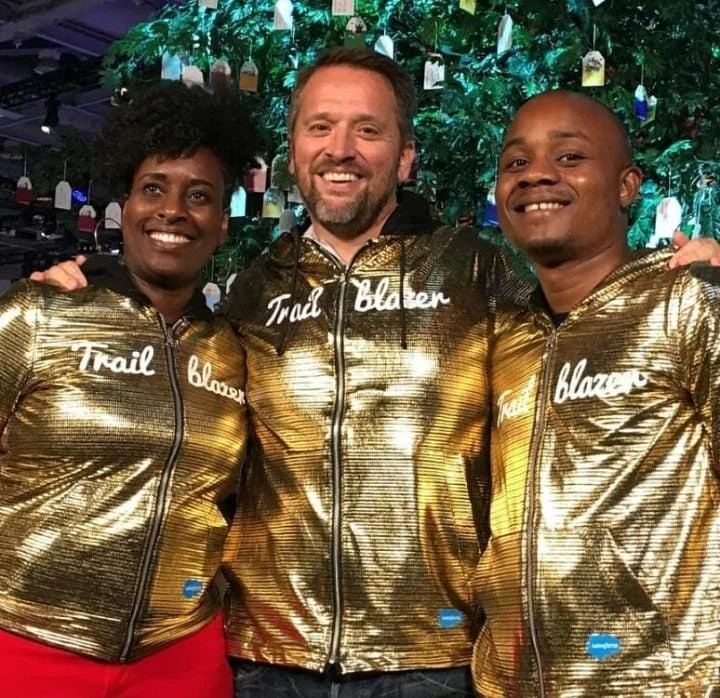
When the keynote concluded, Salesforce surprised him with a Golden Hoodie.
For many people, such a moment would represent the pinnacle of a career. It is one of the company’s highest honours, awarded to individuals whose impact extends well beyond technical excellence.
Alimali remembers the moment differently.
Rather than thinking about recognition, he immediately thought about responsibility.
“I needed to do more.”
That response captures something fundamental about his character.
Awards have never marked the end of a journey for him. Instead, they have become reminders that greater influence should translate into greater service.
The Golden Hoodie may have elevated his profile across the Salesforce ecosystem, but it did not alter his priorities.
If anything, it strengthened them.
Today Alimali remains the only member of the Africa Ohana community to have received the honour. Yet when asked how that feels, his answer is immediate and characteristically selfless.
“I hope more people join me.”
It is difficult to imagine a more fitting response.
Throughout our conversation, success is never described as something to be possessed. It is something to be multiplied.
Success as Multiplication
That philosophy is perhaps best illustrated through a story that has nothing to do with awards or keynote stages.
When asked about his proudest achievement, Alimali speaks instead about an accountant.
The man had spent years working in finance but wanted a different future. Curious about Salesforce but unsure where to begin, he reached out to Alimali for guidance.
They explored Trailhead together. They discussed career options. They worked through the challenges that every newcomer faces.
Over time, the accountant became a Salesforce professional.
Today, he is not only building his own career but also mentoring others entering the ecosystem.
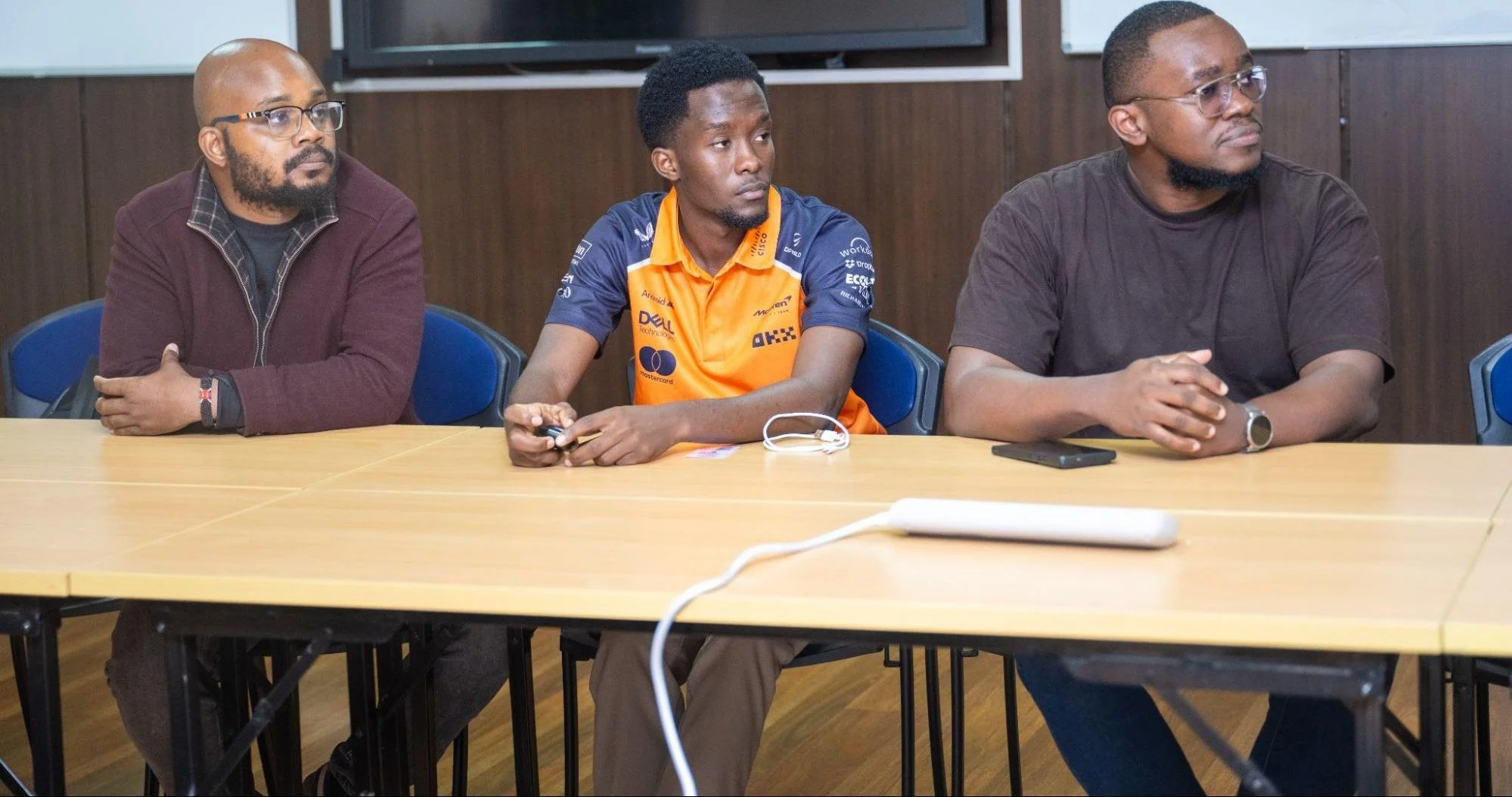
As Alimali tells the story, his expression changes.
There is genuine pride, not because someone followed his advice, but because that individual has now become a source of encouragement for someone else.
That, to Alimali, is what success looks like.
Not creating followers.
Creating people who eventually no longer need you.
Failure and Persistence
Despite everything he has accomplished, one of the most revealing moments in our conversation came when Alimali spoke about failure.
He failed the Salesforce Administrator certification three times.
The timing could hardly have been worse. One attempt came before Dreamforce. Two more happened while he was in San Francisco, balancing speaking engagements, travel, and community commitments. Preparation suffered, confidence declined, and frustration quietly grew.
Many people assumed that someone speaking at Dreamforce must surely already hold the certification. The reality was very different. Eventually he stepped away, gave himself the time to prepare properly, and returned to the exam with renewed focus.
He passed.
The lesson stayed with him long after the certification was complete.
“Failure rarely determines the outcome of a career. Persistence does.”
That perspective influences the advice he now gives to aspiring professionals across Africa, many of whom struggle with setbacks of their own. Certifications may be important, but they are not the final measure of potential. Growth comes from continuing long after the excitement has faded and the applause has disappeared.
Opening Doors for Others
Perhaps the issue Alimali feels most passionately about today is one that many aspiring professionals know all too well.
Breaking into the industry.
He has mentored countless people who have invested months, sometimes years, learning Salesforce. They complete Trailhead, earn certifications, and develop practical skills, only to encounter the same obstacle. No experience. No job. No opportunity.
“It really frustrates me a lot,” he said passionately.
For Alimali, this challenge is not merely an industry problem. It is a personal mission.
One day he hopes to build a consulting company that creates opportunities for emerging professionals by giving them meaningful project experience. Rather than waiting for organizations to solve the problem, he wants to become part of the solution himself.
His vision is not centered on building the biggest consultancy. It is centered on opening the first door for someone else.
Balancing Life and Work
As Alimali’s influence within the Salesforce ecosystem has grown, so too have the demands on his time.
Today, he balances a full-time career as a Salesforce Developer with a growing list of community responsibilities. Beyond his day job, he serves as the Technology Lead at Africa Ohana, helping shape the organization’s technical direction while supporting initiatives that create learning opportunities for Salesforce professionals across the continent. Mentorship also remains at the heart of his work. Whether he is guiding someone through their first Trailhead module, offering career advice or helping experienced professionals navigate new challenges, he continues to make himself available because he remembers what it felt like to begin without a roadmap.
It is a schedule that could easily become overwhelming, yet Alimali has learned that sustaining meaningful work requires more than careful time management. It requires making space for the things that restore you.
For him, that space is often filled with music.
Away from Salesforce, Alimali is a DJ who enjoys creating music mixes, particularly in the Afro House and House genres. It is a passion that allows him to switch gears while still feeding his creativity. In many ways, the precision and rhythm that go into crafting a great mix mirror the patience and focus required to write good code.
More often than not, those two worlds overlap.
“I can’t code without music,” he says.
Whether he is solving a complex technical challenge or working through a new feature, music is almost always playing in the background. It helps him concentrate, keeps his mind clear, and turns long coding sessions into something that feels less like work and more like a creative process.
When he steps away from both the keyboard and the DJ decks, Alimali values something much simpler: spending time with friends. Those moments provide an opportunity to disconnect from deadlines, community commitments, and the fast pace of the technology industry. They remind him that a fulfilling life is built not only through professional achievement but also through the relationships we nurture along the way.
For someone who wears many hats, balance is not something that happens by accident. It is a deliberate choice. By making time for work, mentorship, leadership, music, and friendship, Alimali has built a rhythm that allows him to continue giving his best to every part of his life.
It is perhaps another lesson hidden within his journey. Lasting impact is not created by working endlessly. It is created by building a life that allows you to keep showing up, day after day, for the work and the people that matter most.
A Simple Legacy
As our conversation draws to a close, one question remains. How does he hope people will remember him? There is no lengthy pause. No carefully crafted answer.
“I want people to say I helped them.” It is a remarkably simple statement, yet perhaps the most revealing of the entire interview.
Not that he collected awards.
Not that he spoke on global stages.
Not that he became one of Africa’s Golden Hoodie recipients and an MVP.
Simply that another person’s journey became easier because he was willing to walk alongside them.
In many ways, that has always been the thread connecting every chapter of Alimali’s story.
The young computer technician teaching children to code.
The nonprofit employee discovering Salesforce for the first time.
The Trailblazer studying alone long after everyone else had gone home.
The mentor answering questions from newcomers.
The keynote speaker standing before thousands.
The community leader determined to create opportunities for the next generation.
The titles changed.
The platforms changed.
The audience grew.
But the purpose remained remarkably consistent.
Before we ended our conversation, we asked Alimali what single piece of advice he would offer someone beginning their Salesforce journey today.
He smiled.
“Learn every day.”
Three simple words. No dramatic speech. No carefully rehearsed motivation.
Just a philosophy he has quietly lived for years.
Technology will continue to evolve. New products will emerge. Artificial intelligence will reshape the way organizations work. Entire careers will change in ways few people can predict.
But curiosity, generosity, and a willingness to keep learning remain timeless. That, more than the Golden Hoodie or any professional accolade, may be Alimali Stephen’s greatest legacy.
Because somewhere today, another aspiring Trailblazer is opening Trailhead for the very first time.
They may never know the names of the people who made their journey easier.
But they are walking through doors that remained open because people like Alimali Stephen chose to hold them there for everyone who came after.